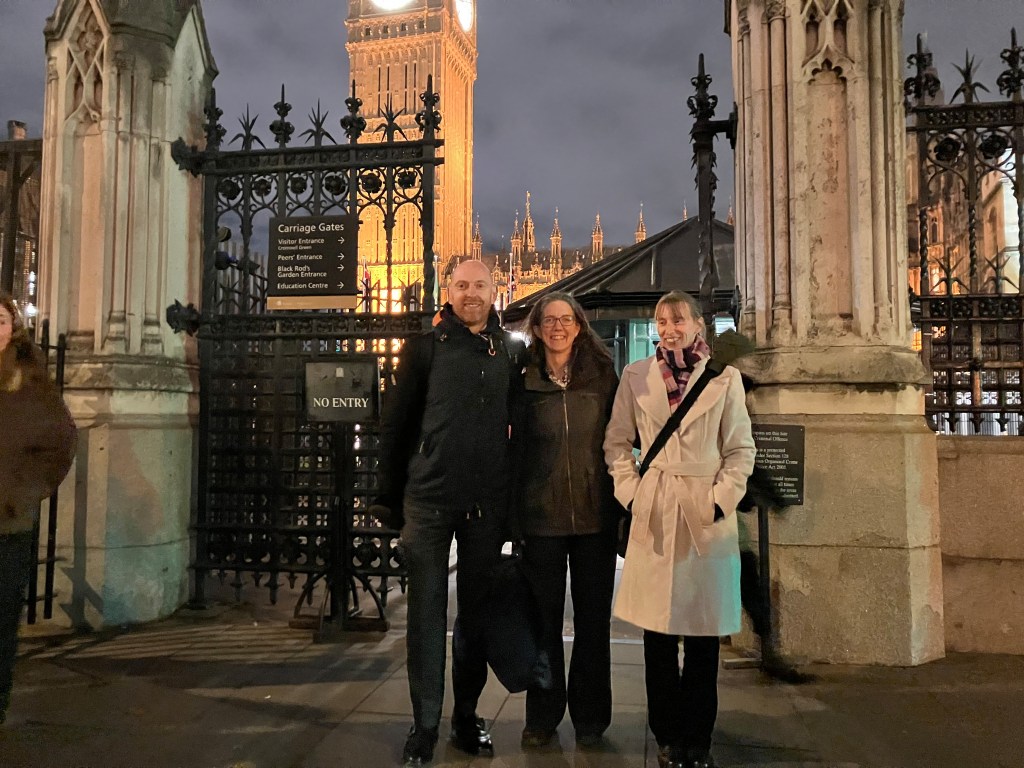
On 25th November 2025, researchers Mike Image, Emma Gardner, Claire Carvell (all from UKCEH) and Tom Breeze (University of Reading) brought cutting‑edge pollinator science to the heart of UK policymaking.
The team took part in a special session of the All‑Party Parliamentary Group (APPG) on Bees, Pollinators and Invertebrates, held at the House of Lords and attended by MPs, Peers, NGOs and academic experts.
We presented new findings from poll4pop simulations carried out under the DRUID project.
Presenting the science
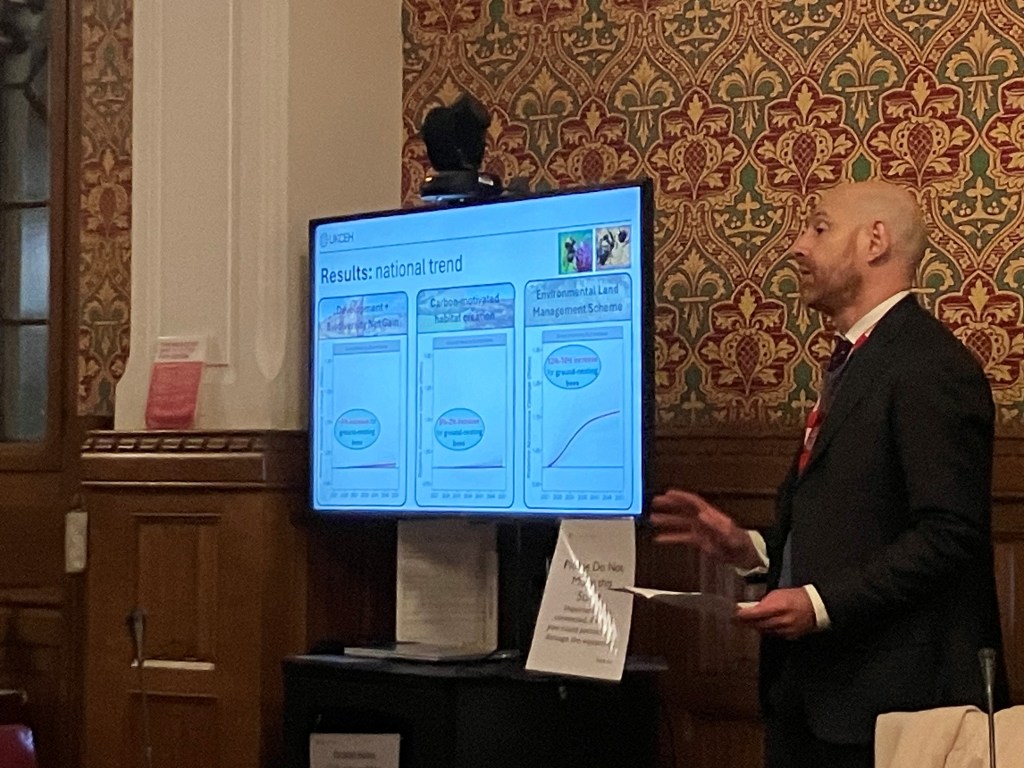
Emma and Mike opened the session with new findings from the DRUID project which predicted how different land‑use policies could shape the future of wild bee populations.
We began by highlighting previous research on the essential role wild bees play in UK ecosystems and agriculture and outlined the pressures driving their abundance and distribution — with land‑use change being a major factor.
We then introduced the audience to the three major government policies studied by the DRUID project, which are set to influence England’s landscape over the next 30 years:
- Biodiversity Net Gain (BNG): development on greenfield land paired with mandatory habitat creation or restoration to deliver at least 10% net gain.
- Carbon‑motivated habitat creation: large‑scale tree planting and peatland restoration to meet national net zero climate targets.
- Environmental Land Management Scheme (ELMS): England’s flagship agri‑environment programme, including the Sustainable Farming Incentive (SFI), Countryside Stewardship Higher Tier and Landscape Recovery.
Using newly-created annual maps that project these land‑use changes forward across England, we demonstrated how the poll4pop model can then predict the resulting impacts on wild bee populations over the next three decades.
The predictions suggest, out of the three policies, ELMS is currently expected to deliver the largest gains for wild bees.
The audience was given a preview of the results for different types of bees and how benefits might change over time. The team are currently writing up the results for publication so they will soon be available for all to read.
A panel discussion
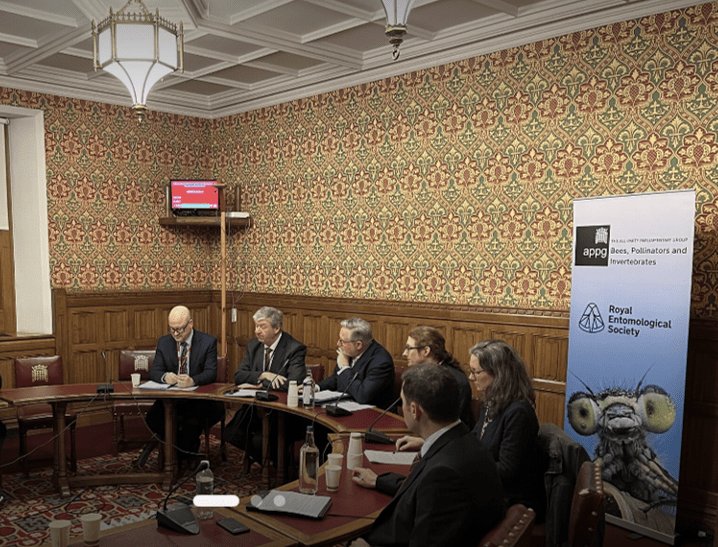
Claire and Tom then joined a panel debate that focused on the future of the currently suspended Sustainable Farming Incentive (SFI) component of ELMS.
They emphasised the importance of offering bundles of measures to farmers, to ensure farms provide the full suite of resources that wild bees need throughout their lifecycle.
This approach would also support other key pollinators such as hoverflies, which make use of multiple habitats during their lifecycles.
They also advocated extending SFI agreements from three to five years to increase stability and ecological impact — a suggestion warmly received by fellow panelists.
Looking ahead
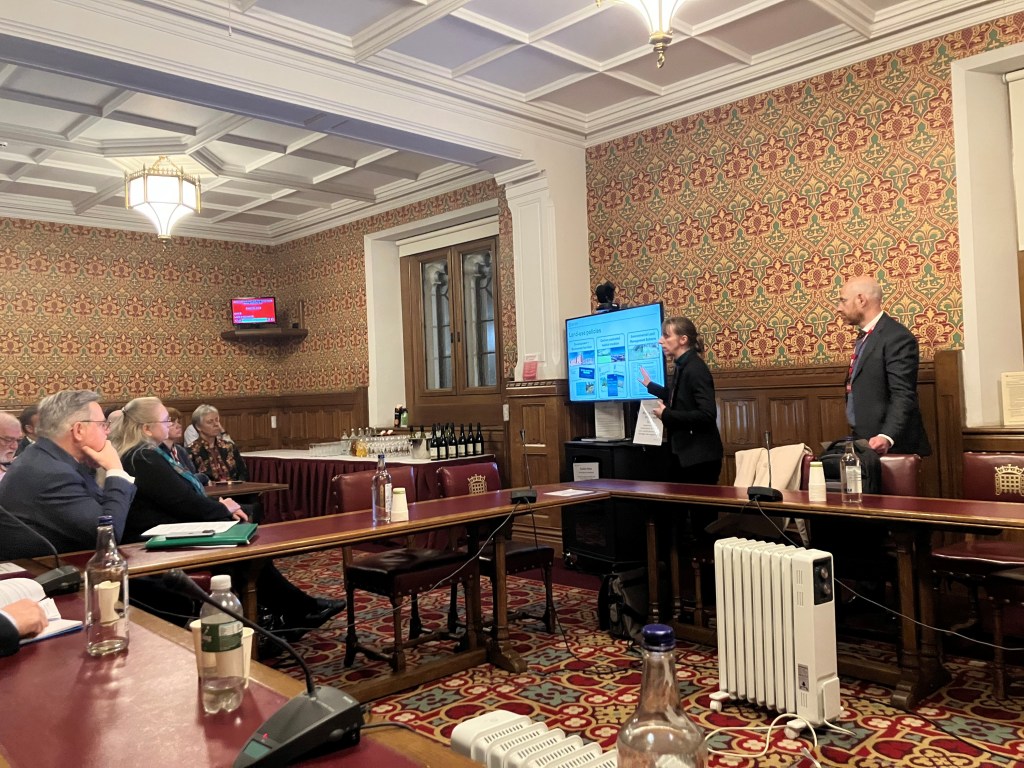
The session was well‑received by parliamentarians, highlighting the potential of process‑based ecological models to support evidence‑led policymaking.
It sparked much discussion around potential parliamentary questions that could help further action to support wild bees and other pollinators across England.
Special thanks to Simon Ward (Royal Entomological Society) for organising the event, and to Barry Gardiner MP for chairing and hosting. We also thank fellow panellists Alastair Carmichael MP, Chris Hartfield (National Farmers Union) and Jon Williams (BASF UK) for their excellent contributions to the discussion.
 *4pop models