We do much of our work with communities in collaboration with Amphibian and Reptile Groups of the UK (ARG UK). They are experts in community co-working approaches.
Below are some of the community events and projects that we’ve variously led, collaborated on, or contributed to.
Exploring connectivity
We worked with local artists, conservation organisations and scientific researchers to create the interactive exhibition Animals on the Move.
It encouraged visitors to consider connectivity for our migratory animals, the challenges human activities add to their migrations, and the things we can all do to help.
We welcomed 536 visitors over 2 days and engaged 214 children across 7 schools.
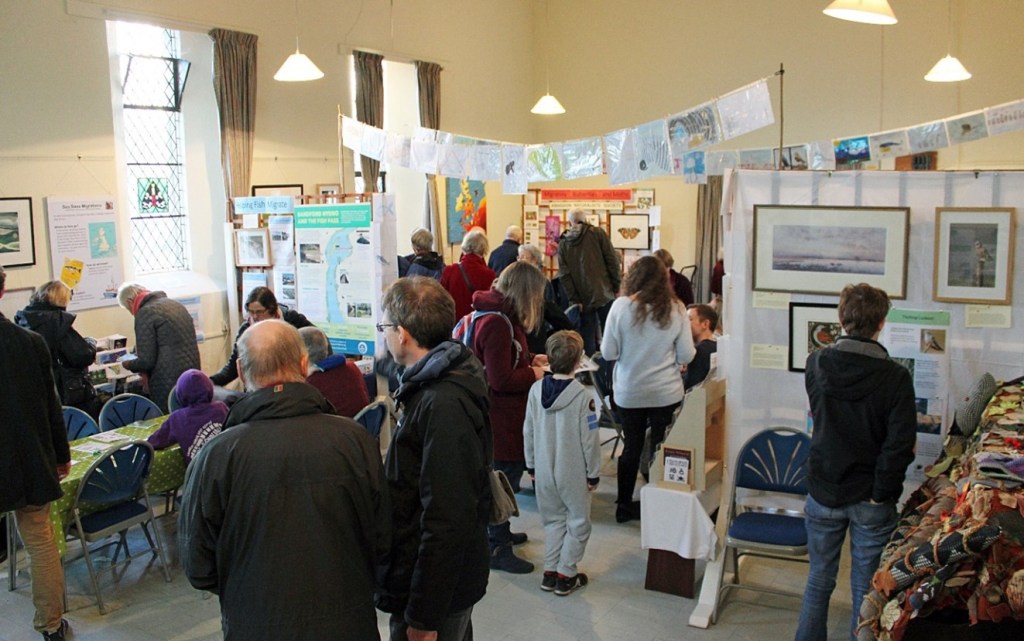
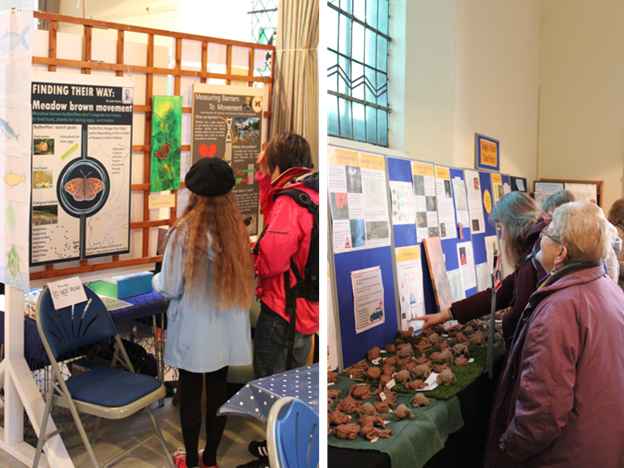
A huge thank you to our exhibition partners Bagley Wood Toad Patrol, Oxfordshire Amphibian and Reptile Group, Abingdon Swift Project, Abingdon Naturalists’ Society, Low Carbon Hub and University of Reading, and to the British Ecological Society for providing funding.

Some of the audience’s feedback:
‘Gabriel’s story made me think more carefully about the intrinsic value of “waste land” ‘
‘I learnt that it is worth sticking your neck out and attending meetings that could result in making positive changes for wildlife.’
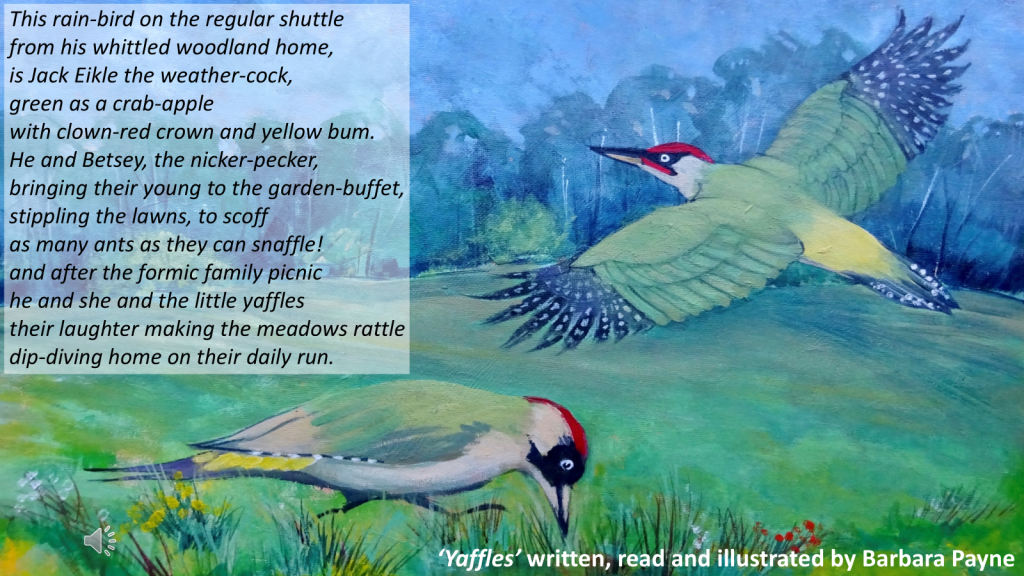
We also collaborated with IF Oxford Festival of Science and Ideas, local conservation volunteers, researchers, and creative practitioners (comedian Alex Sparrow, poet Barbara Payne and storyteller Gabriel Schenk) to create the online event Freedom of Movement.
This event took the audience on a spoken-word journey exploring many different types of animal movement – daily foraging, seasonal migration, mate searching and juvenile dispersal.
It asked ‘how we can help them on their way?’ and finished with an interactive story completed by the audience.
The Association for the Study of Animal Behaviour kindly provided funding for the event.
Gathering local knowledge of past landscape changes
It has become hard for many low mobility species, such as amphibians and reptiles, to move around our landscapes. If a population dies out in one place, it can be difficult for them to recolonise.
This means the legacy of past landscape changes can have a big impact on their current distributions.
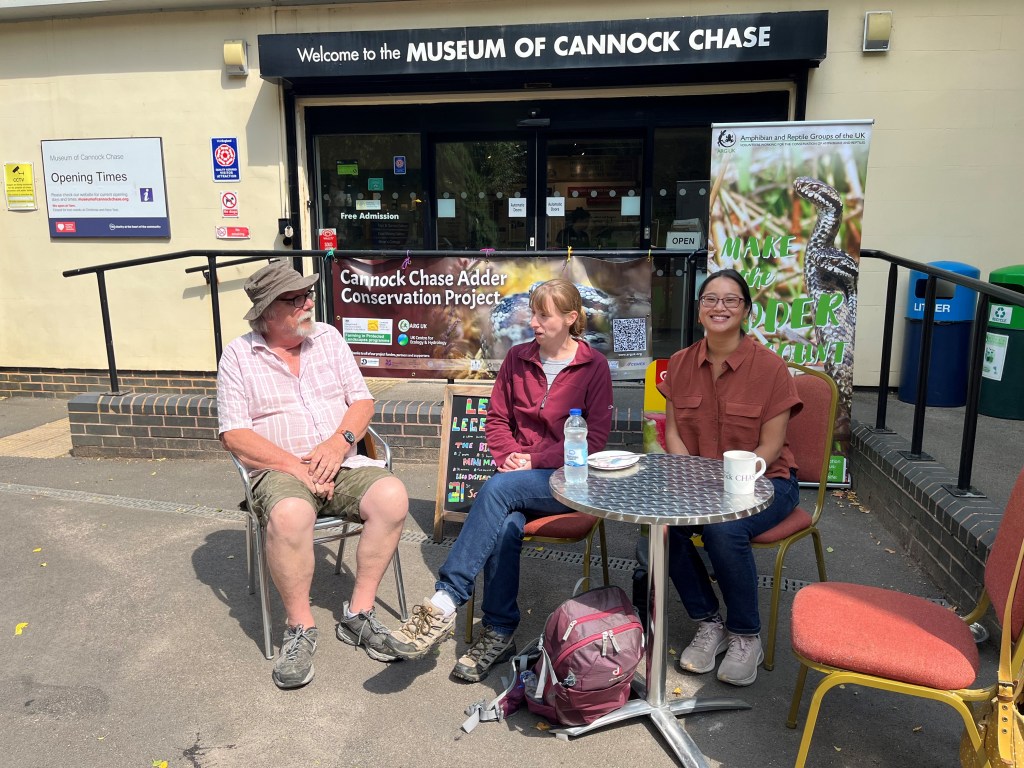
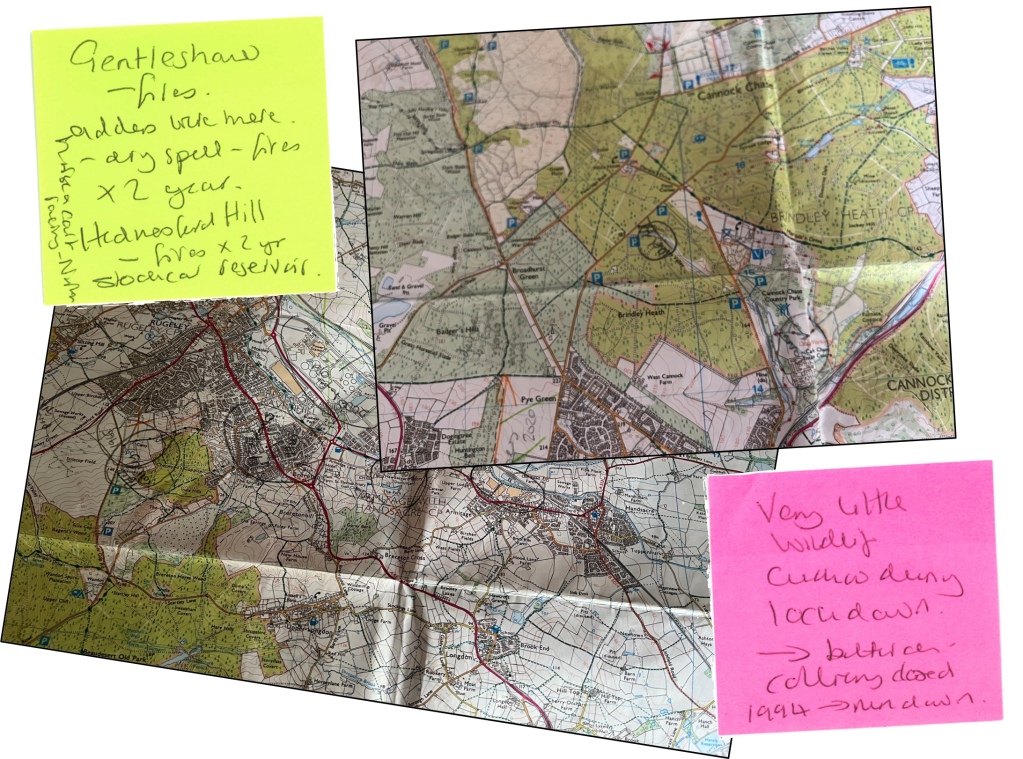
We spent a day at the Museum of Cannock Chase with Angela Julian from ARG UK, exploring ways to gather local knowledge on past landscape changes.
Thank you to all the visitors who shared their knowledge with us as we begin to explore together how community knowledge of past habitat changes could help better predict amphibian and reptile responses to landscape change.
‘The Changing Chase’ event was funded by NERC through our Dynamic Landscapes project.
Thinking about landscape change
Our landscapes are constantly changing but change can be stressful and unsettling for communities.
How can we make changes that are sensitive to past, present and place that are good for people and wildlife?
We worked with Burford Environmental Action Group and ARG UK to run a one day workshop called ‘Our Past and Future Landscape’.
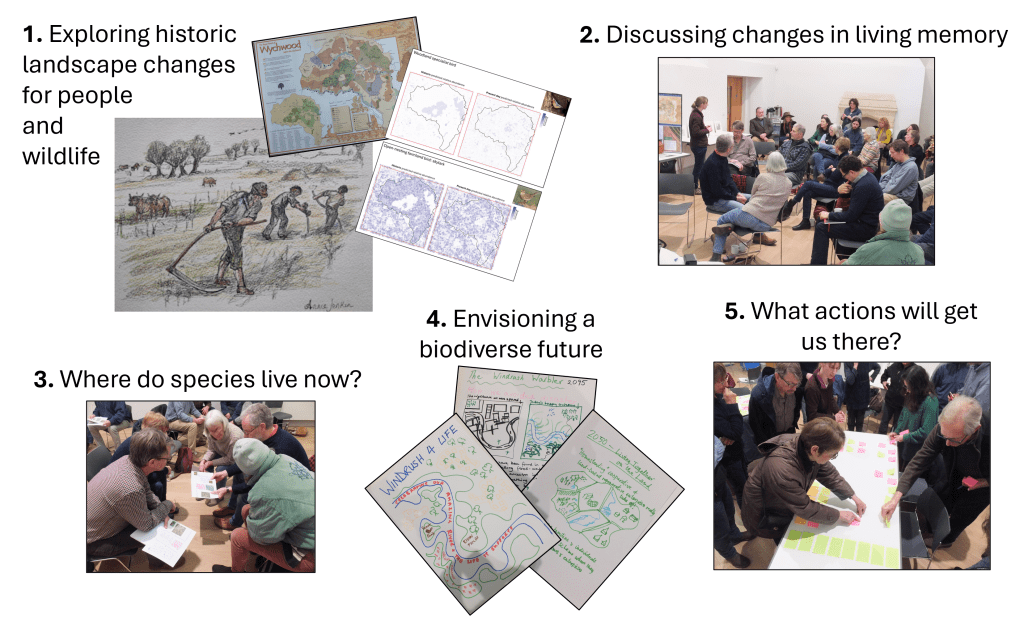
We took a long view of the local landscape changes that had happened since the ice age – both natural and human-driven – and then adapted visioning techniques pioneered by Wyrd Futures to imagine and plan changes to encourage a biodiverse future for the landscape.
‘Our Past and Future Landscape’ was funded by NERC through our Dynamic Landscapes project.
Working with urban communities
How can we imagine nature-rich futures taking into account the many pressures that communities are facing and that different communities have different relationships with and visions for nature?
Together with ARG UK, we ran a series of events at:
- Stanwell Moor Community and Wellbeing Garden
- Brabazon Estate Community Centre
- Ham Youth Centre
where we explored themes of food, migration and homes from the perspective of people and other species.
We discussed nature connection and both barriers to and visions for nature-rich futures in urban areas.
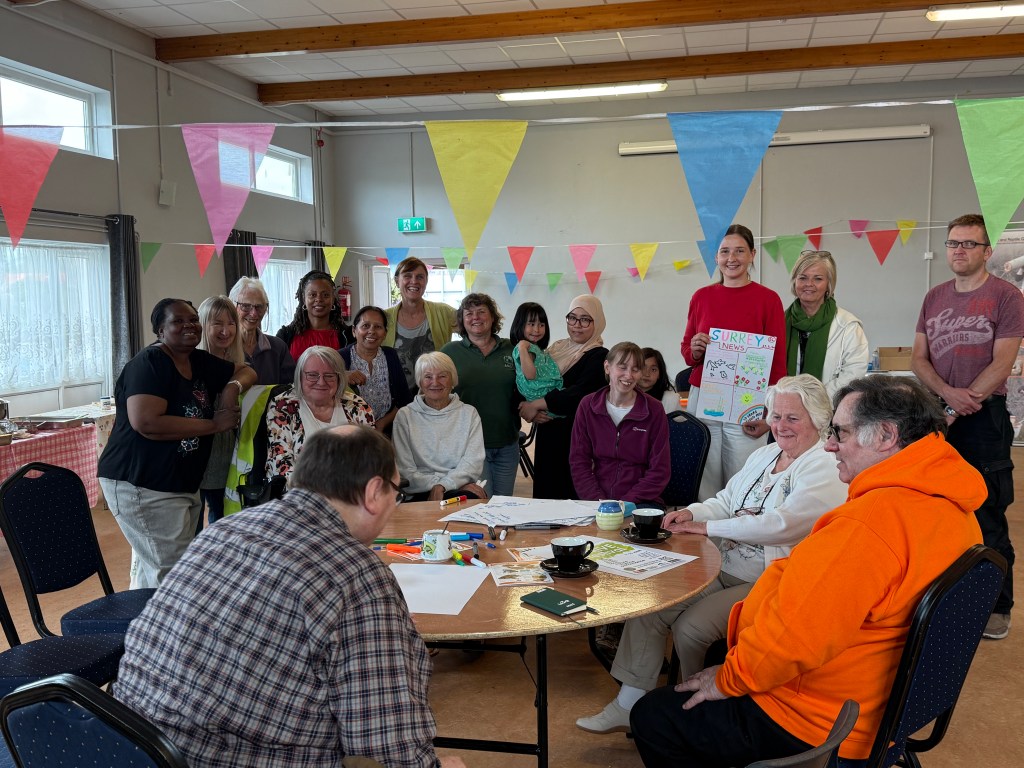
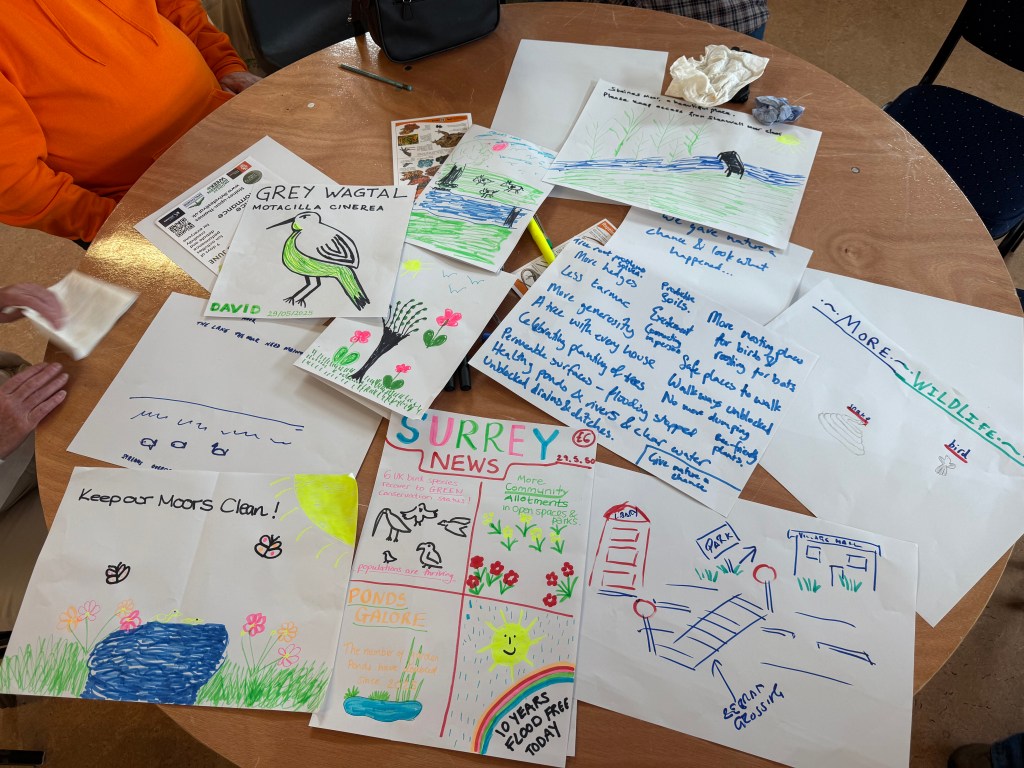
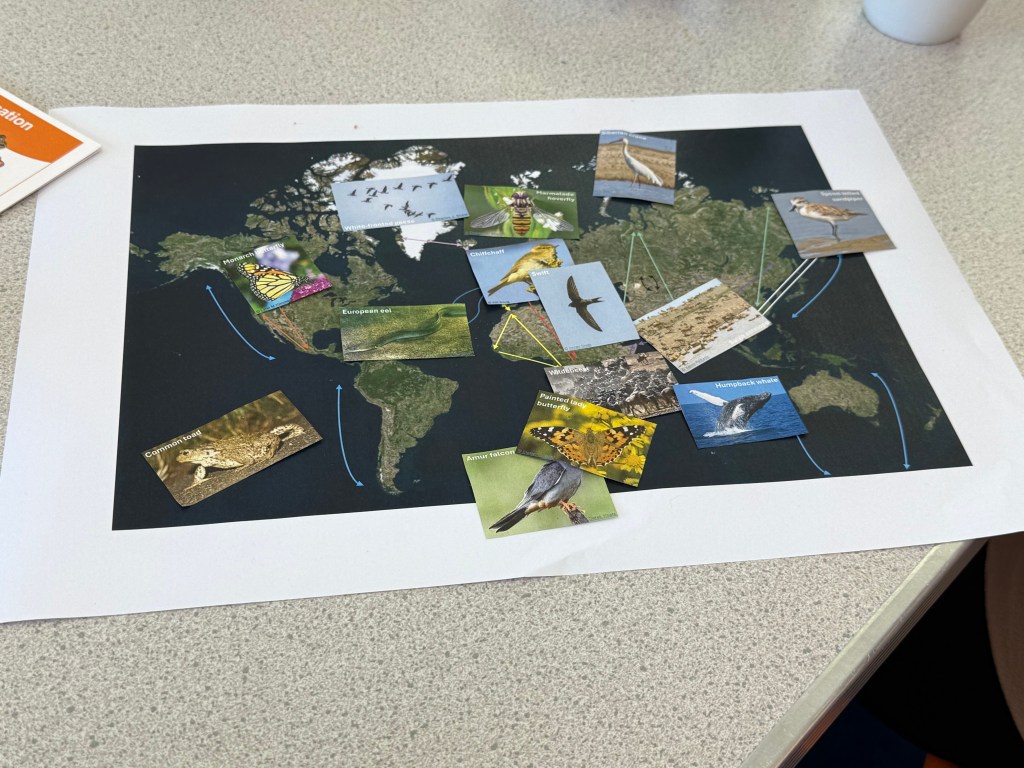
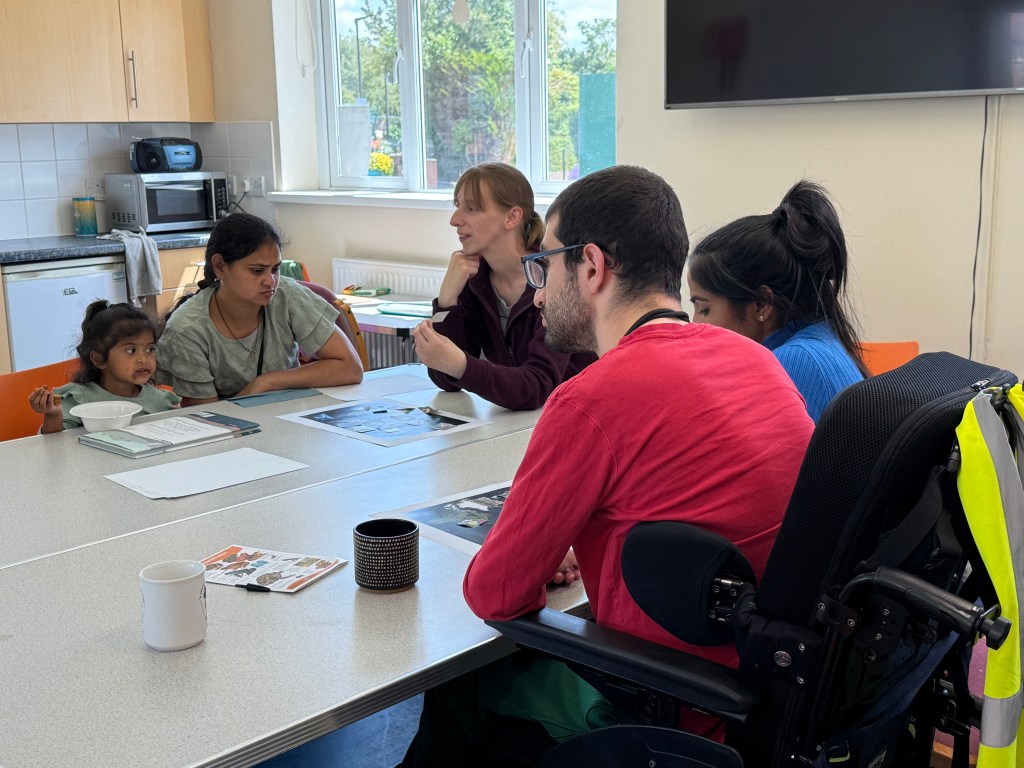
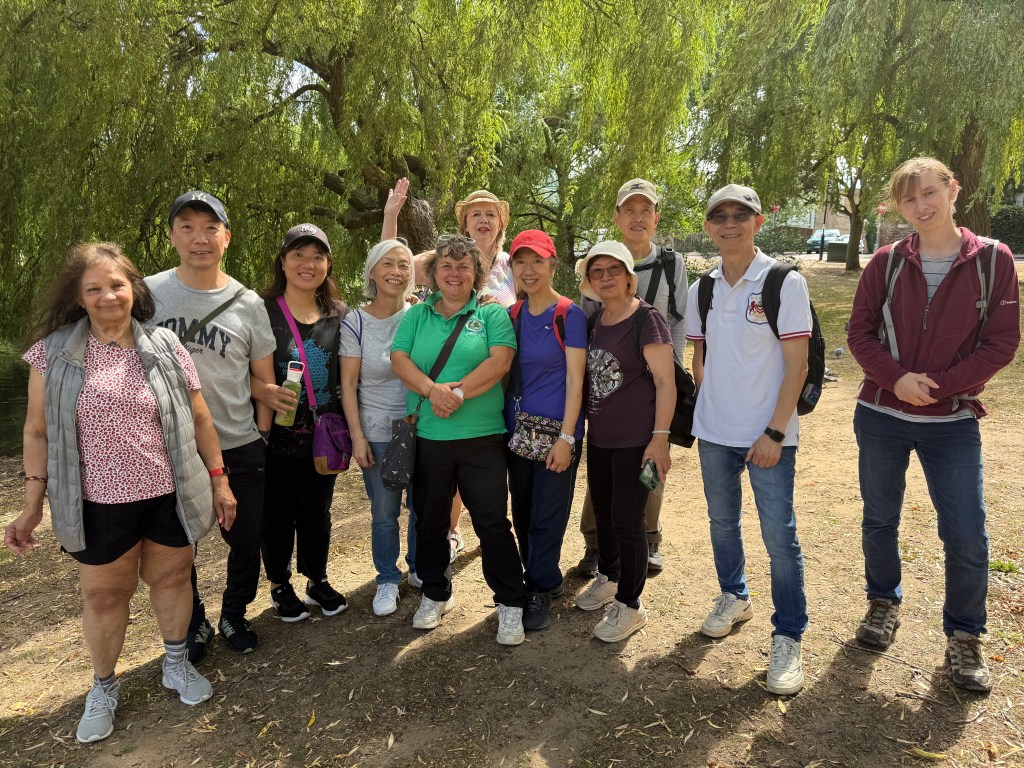
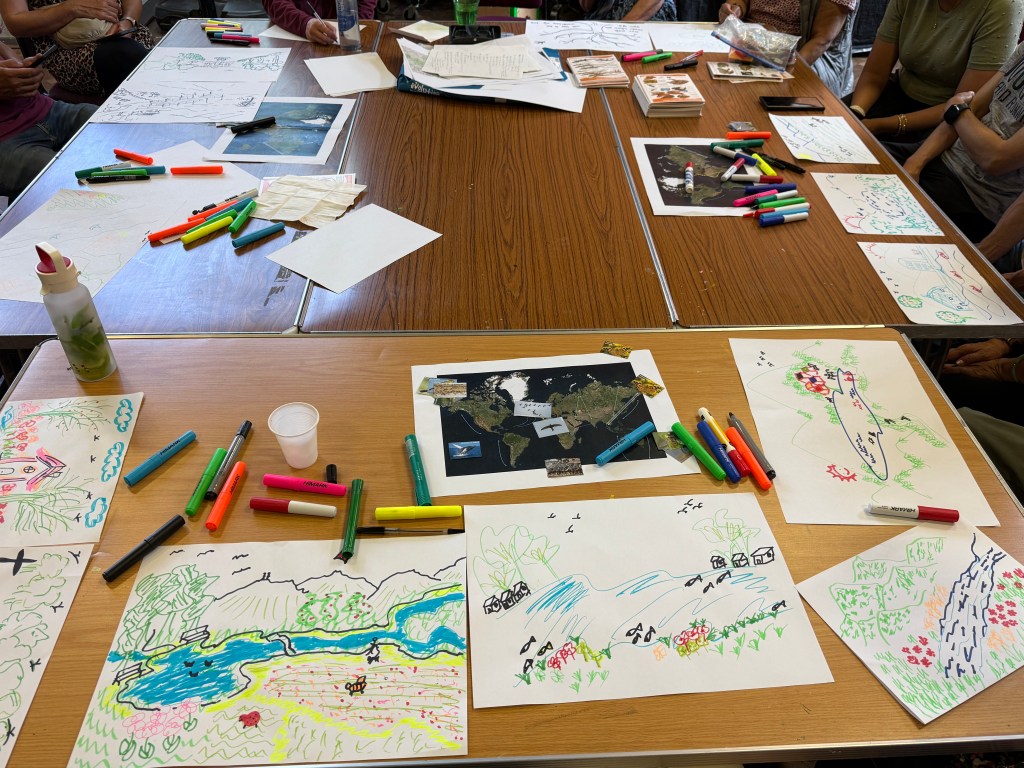
From top to bottom, the nature connection days at Stanwell Moor, Brabazon Estate and Ham. Photographs (c) Angela Julian
Thank you to all the communities for taking part and being so welcoming and to Talking Tree, Stanwell Moor Community and Wellbeing Garden, Spelthorne Borough Council, Let’s Go Outside and Learn, London Borough of Hounslow, Multicultural Richmond, and London Borough of Richmond upon Thames for their support.
All three events were funded by NERC through our Dynamic Landscapes project.
Helping communities to survey and advocate for species
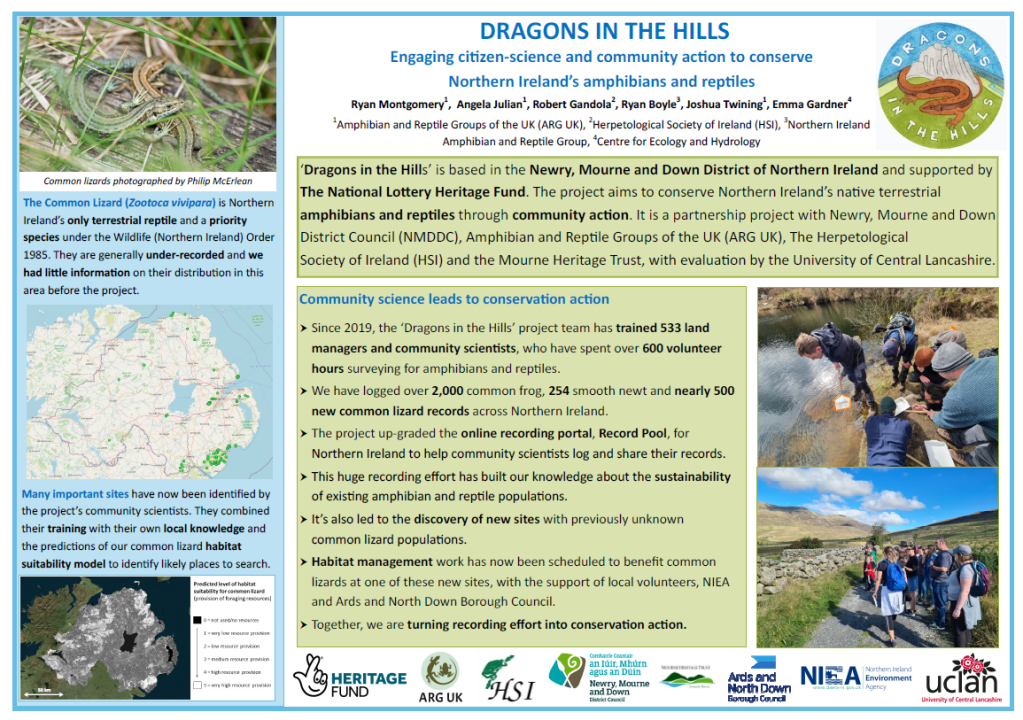
We provided rept4pop model predictions for common lizard habitat suitability to the Dragons in the Hills project.
This project, led by ARG UK, worked with communities in the Newry, Mourne and Down District of Northern Ireland to map and conserve their local common lizard, common frog and smooth newt populations.
Community scientists involved in the project used the model predictions to help identify areas to search. They discovered new sites with previously unknown common lizard populations, whose lizards are now being cared for.
We have also provided model predictions to community-based conservation groups concerned about the impact of proposed developments on their local wildlife and have tried to raise more awareness of their concerns with other organisations – visit the planning and development page to read more about this work.
 *4pop models