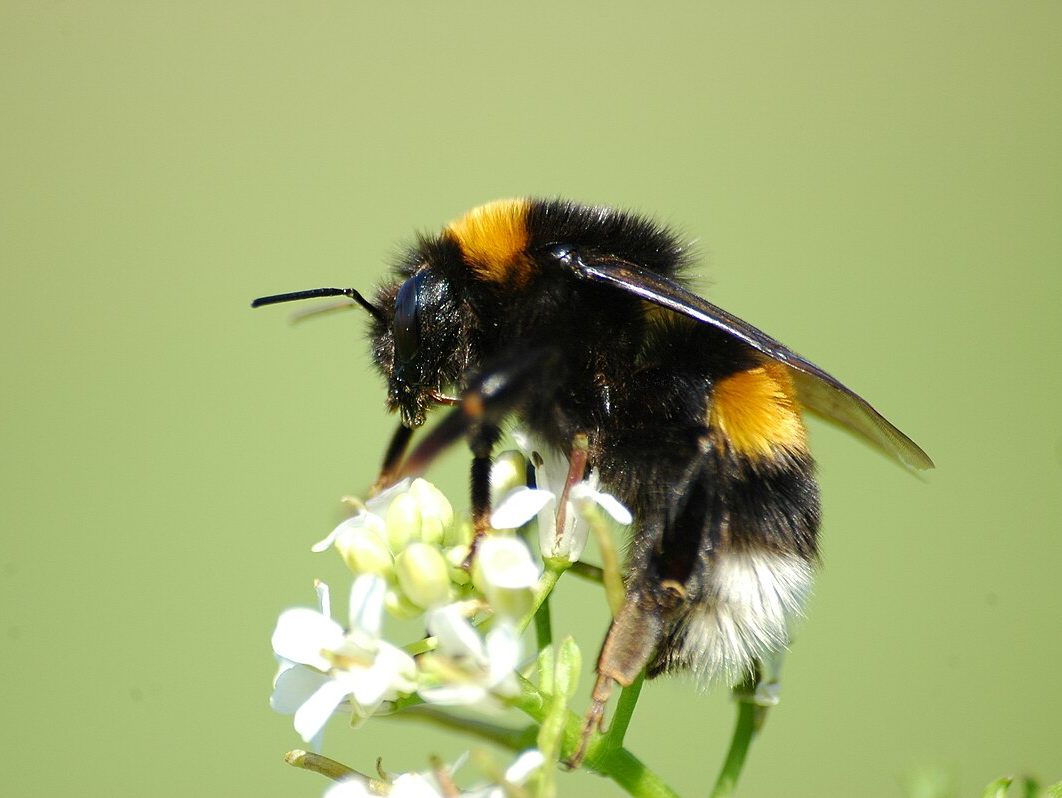
This month’s blog post is written by Ellen Knight, who’s in the final year of her PhD researching bees in agroforestry systems using both field surveys and poll4pop modelling.

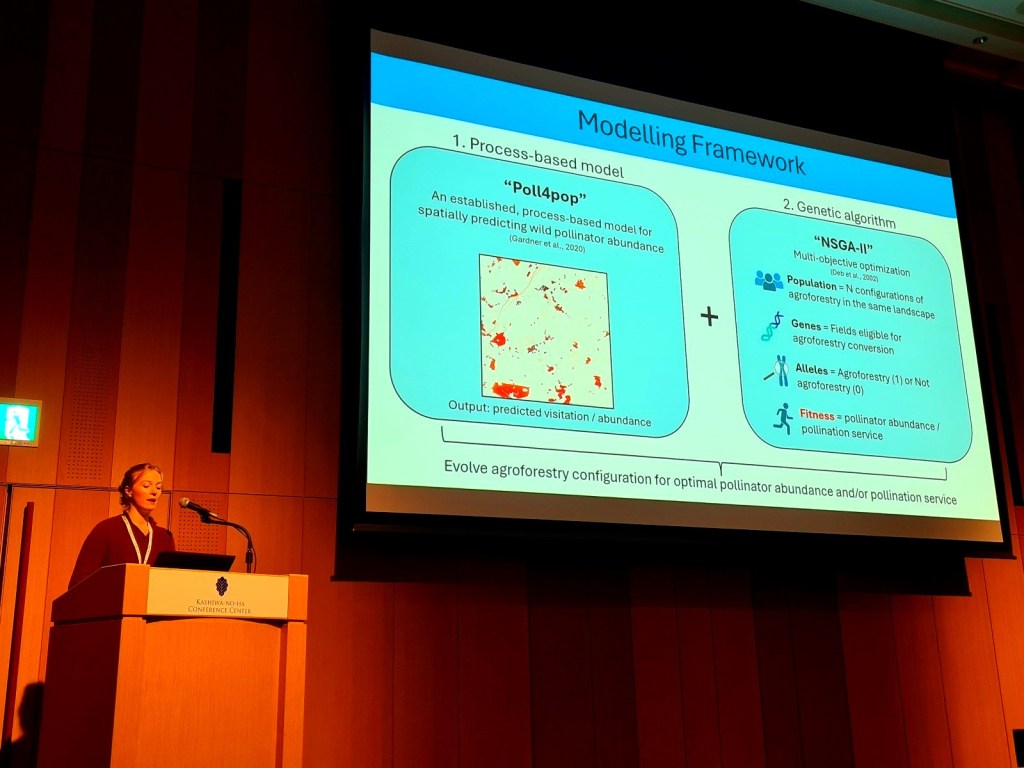
In October 2025, I was very lucky to travel to Japan to present some of my PhD work at the ‘International Society for Ecological Modelling’ global conference, held at the University of Tokyo.
After months sat at my laptop, coding and wrangling poll4pop to generate huge piles of data, it was very exciting to have the opportunity to pull together all my findings and share them with an audience of fellow modellers, even in spite of the horrible jet lag.
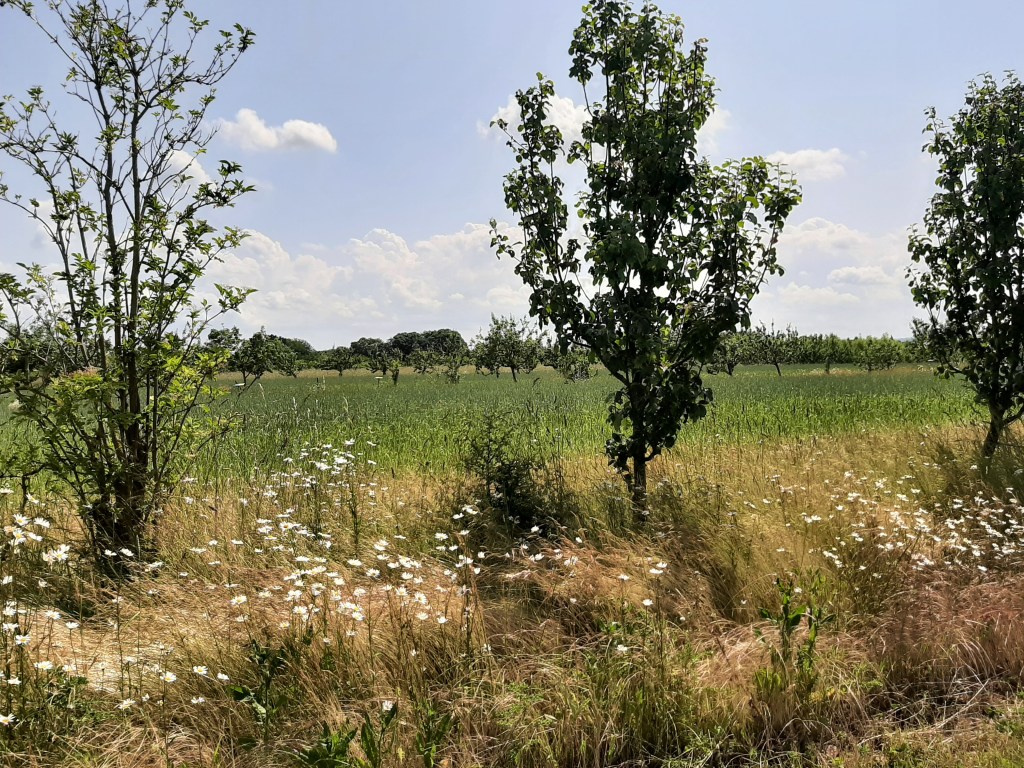
The general theme of my PhD is exploring the effects of silvoarable agroforestry (trees planted in crop fields), a land use with growing interest and investment in the UK, on pollinators.
Poll4pop is an ideal tool to use for this sort of study, where we are trying to explore the effects of a land use which is expanding rapidly but not currently implemented at wide scales.
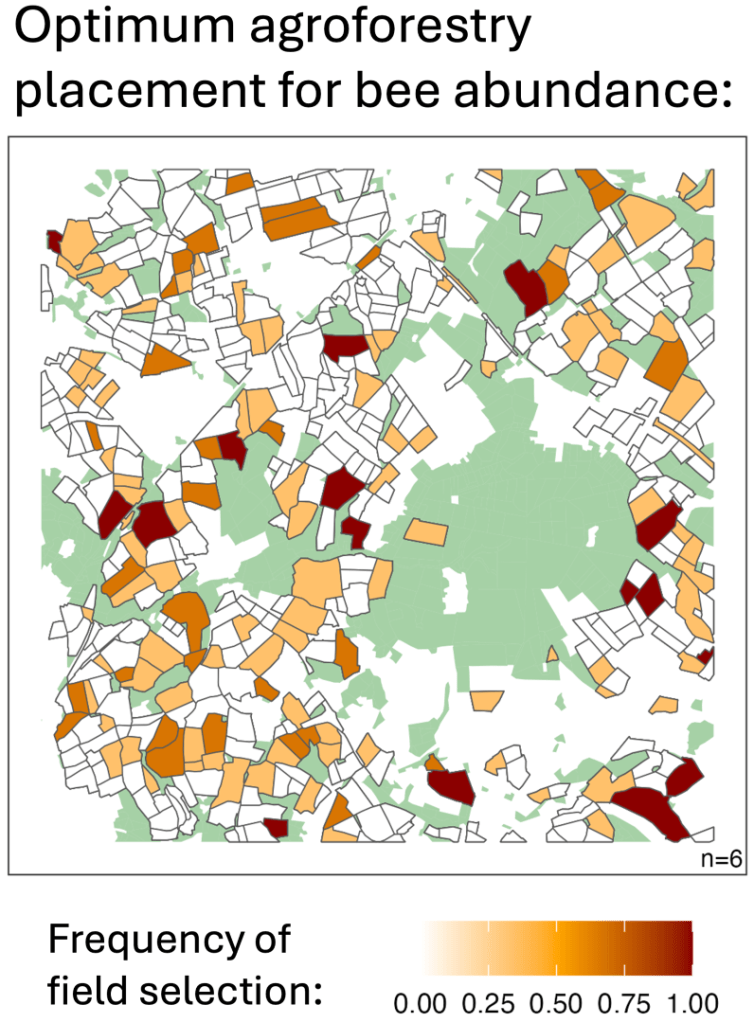
The work that I presented at this conference in particular was an investigation of whether the way we place agroforestry across landscapes can affect its benefits to pollinators. To do this, I combined poll4pop with an algorithm which allowed me to theoretically ‘evolve’ the configuration of agroforestry across landscapes to maximise bee abundance and pollination service.
This came out with some really cool findings, for example that agroforestry configuration might matter more for increasing bee population stability than overall abundance, and that the benefits of landscape-wide agroforestry at government target levels may be different depending on the amount of semi-natural habitat nearby.
It was also fascinating learning about the research other people across the world have been doing, from creating ‘digital twins’ (virtual replicas of study systems which are connected to real-world data), to inventing entirely new conceptual frameworks of how ecological systems should be modelled.
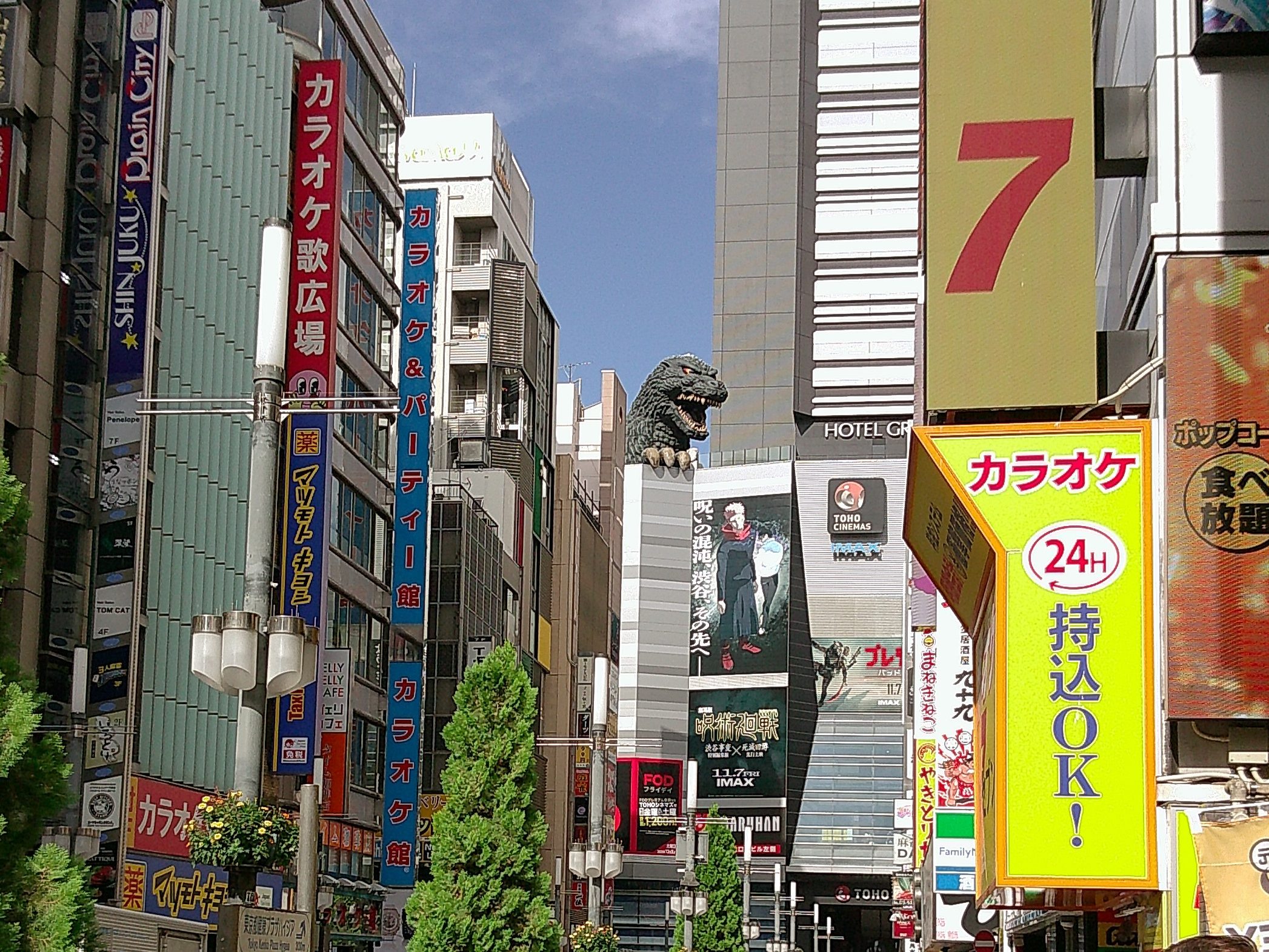
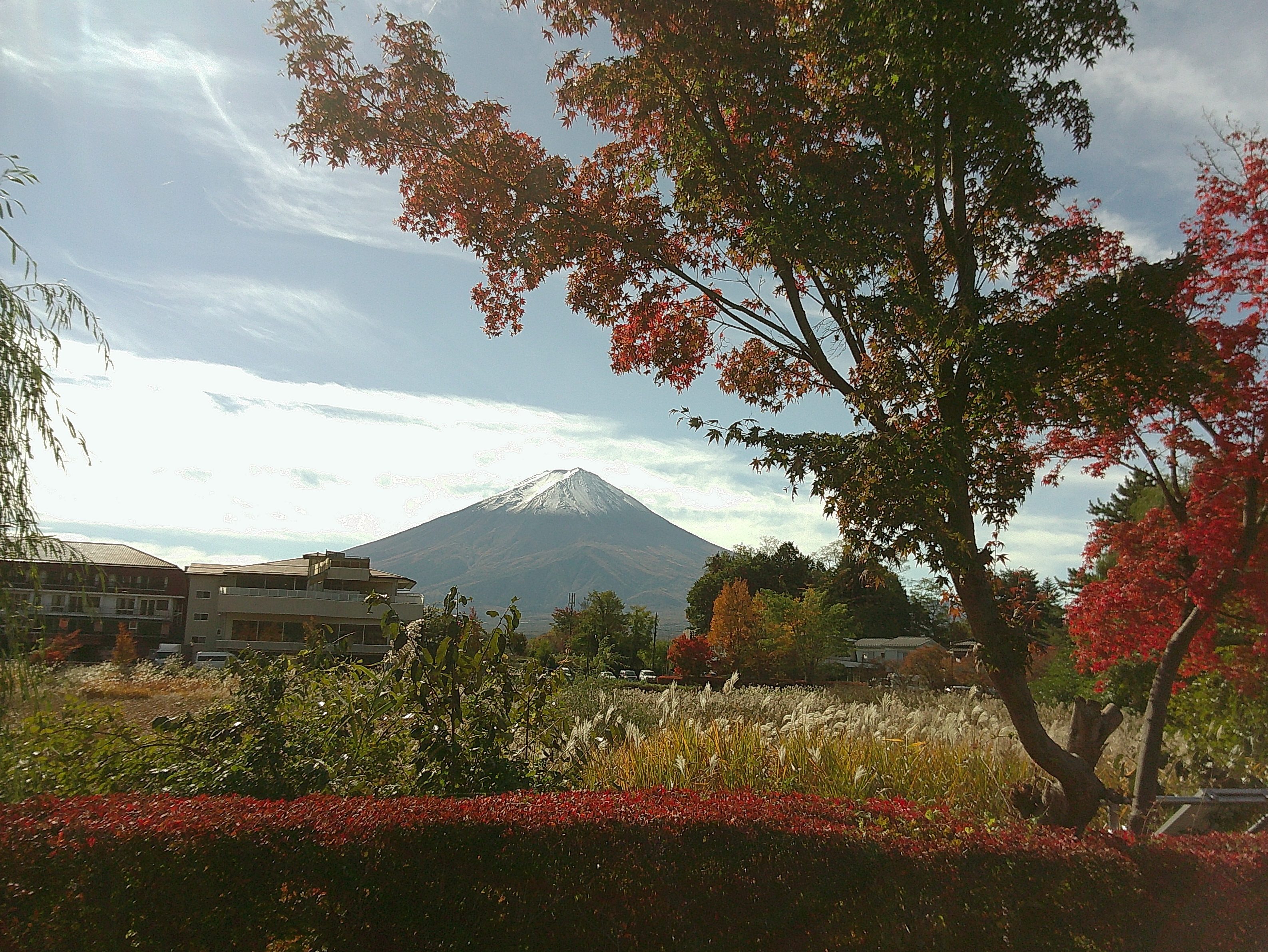
Seeing all this amazing work was a great reminder that ecology is not always just about getting out into the field. Modelling is a vital step in researching and predicting the effects humans have on ecological systems, from the past to the distant future, and the conference was a great showcase of all the different ways this can be done. And of course, it was a fantastic excuse to do some Japanese sightseeing as well!
All photographs (c) Ellen Knight except where captioned otherwise.
 *4pop models